Monday, 28 November 2011

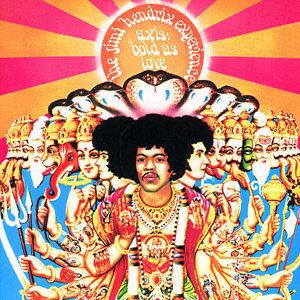
Album Cover Art Research - Axis: Bold as Love by Jimi Hendrix


This artwork was released the same year as Sgt Pepper, and shares similarities with it as well. Again it references the year it was released 1967 the "Summer of Love" a time of "free love", recreational drug use, and empowerment as people chanting Hare Krishna over a camp fire hoping the revolution that never came would happen. It share's the Indian cultural influence as the Beatles artwork had many Indian Guru's (courtesy of George Harrison), this one takes it further with actual Hindu Gods and the The Experience themselves as Gods, which gives the listener the view that the God are these god-like super-musicians and the music is "not of this world" it may also appeal to people on acid trips, as the music is sometimes used for. Apparently, Jimi Hendrix was displeased with the cover art, as he thought it would have been much better to have his Native American heritage used as the artwork not the Indian style.


Album Cover Art Research - Sgt. Pepper's Lonely Hearts Club Band


In this classic psychedelic rock album artwork, which is by The Beatles who were contemporary's of Jimi Hendrix. The artwork show's several references to the era and of people The Beatles considered their heroes or celebrities they liked. The references of the era included the flowers which represent the Flower Power movement or the Hippie Movement, this is important because in 1967 both artists released albums that heavily influenced people in the "Summer of Love" in 1967, and the famous people on the cover, such as Bob Dylan - who had recently "gone electric" - Marilyn Monroe, were influential figures in the 60s. While people like Freud and Karl Marx had heavily influenced the ideologies of the time. The Beatles themselves are the "Sgt. Pepper's Lonely Hearts Club Band" and are dressed in uniforms that are their characters on the album, though not a concept album per se. It also cost £2,868 5s 3d (£38,823) which was the most expensive album artwork of it's time.


The inside of the album, contains the album lyrics and photos of the band, which apart from the front cover which in many ways is unlike any other album covers of the time, is pretty much like any other from the period.

Wednesday, 23 November 2011

Week Six

After filming some extra close ups we have finally finished filming, and the music was edited yet again, to the point you couldn't tell it was, and the film is now finished, with just some finishing touches to do on the deadline itself which are so few it will be right on time.

Goodwin's Theory

1. Music videos demonstrate genre characteristics (e.g. stage performance in rock video, dance routine)
The music video demonstrates the Rock music video's characteristics of a performance by an artist, in our case David playing his guitar to Jimi Hendrix's All Along the Watchtower. It is also linked to the specific sub-genre of Rock he was known to play in "Psychedelic Rock" that our music video tries to emulate, with it's effects and set to a natural scene. Also a lot of shots of David playing the guitar is another classic example of a rock music video, because practically the vast, vast majority of all Rock Music videos have this.

2. There is a relationship between lyrics and visuals
There isn't a relationship between the lyrics and the visuals, we did try to do that earlier on in the filming process but the narrative of the song is jumbled backwards and wouldn't make sense in our video if we tried to make it as either a purely narrative, or mixed narrative and performance video.

3. There is a relationship between music and visuals
There definitely is some kind of link between the music and the visuals, with the Jimi Hendrix Costume with it's typical late 60s to 70s flares and the afro, and the Peace Sign medallion is a definite link to the songs era, also we feel the effects represent the "trippiness" to the song and the natural environment of the majority of the music v


4. The demands of the record label will include the need for lots of close ups of the artist and the artist may develop motifs which recur across their work (a visual style).
The record label would demand a lot of close ups, which we feel we haven't provided enough of, the instrument and playing, sure, but not of David actually lip syncing which is what they would probably have wanted. The motif we had was the Peace Sign medallion which we thought would work quite well because of the history behind it.
5. There is frequently reference to notion of looking (screens within screens, telescopes, etc) and particularly voyeuristic treatment of the female body.
In this video there are no women in it, so our video does not contain this element, or screens within screens and telescopes because we felt there was simply no need for us, and there was only three of us in a group and we didn't really need outside help to act for us.

6. There is often intertextual reference (to films TV programmes, other music videos)
Our intertextual references are the costume itself which, although not completely accurate of what Hendrix would have worn at the time, it is a pretty good representation. The same with the Guitar, which although being a Stratocaster, it isn't a true Fender Stratocaster, and it isn't left-handed like Jimi was. Also the effects, although not as what we hoped them to be, is an attempt to make a trippy, psychedelic music video like they would have made in the 60s.
Friday, 18 November 2011

Filming - Week Five

This week we resumed filming and filmed more shots, after David had recovered sufficiently and after filming some landscape shots felt we had enough. The editing has gone on well, but there is still along way to go, so we have been thinking about editing the song like we did last time, but this time to fit the ending, we hope it will all go to plan.

Sunday, 13 November 2011

Filming - Week 4

It turns out we cannot film this week because David has contracted a cold from the conditions during the filming the week before which was very windy and cold and his costume was simply not adequate enough to protect him, so we sat down and edited more of the film and did parts of the blog, there is at the moment no progress on the Magazine Advert and Cover Art however we hope to do that next week.

Wednesday, 9 November 2011

Differences Between A2 and AS

In AS all we had to do was film a two minute start of a film, which wasn't as much footage compared to a 3-4 minute music video in A2 which has a lot more footage and apart from the blog which we also did in AS we have to do print based work as well, so the work load is much more of a challenge and bigger than it was last year. It has been a bit more difficult writing the blog, shooting the video and making the CD cover because it is three things to do than AS' two.

The editing process is different as well. We have to film it more in a montage style than continuity editing like in AS, because in a music video you don't have much time to do that as you would in a film. And it is also a lot more complex, because in AS you didn't really have to do fancy effects to get you mark (although it would've helped) in A2 this has to be used in order for your video to get you a grade and look like a professional piece.

The time management hasn't been much of a problem because in AS and A2 we managed to update and finish our blogs on time, and finish filming our videos on time as well, and the print based work did not hinder us during this as well. In As it was much easier to manage our time because we only had two things to do at one time.

Monday, 7 November 2011

Album Advert 3


This is an original 1969 album advert of The Who's album "Tommy" this is very much contemporary of Jimi Hendrix as he was alive at the time. And it comes in a very traditional format in a poster showing it as a "double album" as they were rare in those days, who it was written by - the guitarist -, actual quotes of the lyrics, pictures of the band members, the name of the record company. This would have been very familiar to Jimi at the time.

Album Advert 2


This is another contemporary and influence of Hendrix, Bob Dylan. Although this is an advert of his most recent album, it is a prime example of modern music advertising, as instead of the traditional vinyl which would have been very familiar to Jimi, it also has CD and download, CD being a twenty odd year old invention and downloading a recent phenomenon which would appear totally alien to Jimi if he were to see this as he was in the 60s, not if he had survived. It also has a small set of Logos, the record label, but also HMV and possibly Itunes which show's the buyer where to buy this album.

Album Advert 1


This is an advert for the Rolling Stones single "Angie", it has on it the logo of the record label which released it, and a picture of the album "Goats Head Soup" which also happens to have a picture of Mick Jagger, not only is it advertising the music but also the band itself, as a picture of the lead singer is very important as it gives the audience the information about the band and the music. And it also has an advertisement for a television appearance the band was about to make. Seeing as this is from a contemporary band of Jimi and was released only three years after he had sadly died is a great example of what the adverts were like at the time.

The Creative Process

How you got ideas and developed them into the video: Watching music videos relating to psychedelic rock and taking specific elements and incorporated them into our work, and gave it a unique twist.

Themes, Costumes, Props, and locations: The main theme of our work, is the Psychedelic elements of the song and it's artist, we made this apparent through editing and choice of costumes.

Inspirational videos, artists etc: The videos that inspired us were the Jimi Hendrix video to his song Crosstown Traffic, Stevie Ray Vaughan's Cold Shot and The Rolling Stones Jumpin' Jack Flash videos. The main artist that inspired was the singer of our song choice Jimi Hendrix because of his image at the time, but also in the Jumpin' Jack Flash video, the style the group has and the performance elements, and Stevie Ray Vaughan's where it is mostly him with his guitar and an actor rather than with his whole band (they do appear sporadically).

How the group made its decisions (and who contributed): After individual work on the blog we came together and discussed ideas on the video together, eventually we came up with the idea of a dual narrative and performance video, with David as the artist of the song performing the song in a mainly natural environment, because the whole hippie psychedelic movement was into that kind of thing, with the narrative acted out by the rest of us in Manchester. The narrative part fell through but the performance part was retained.

Explain how you changed ideas: We realised that the lyrics of the song were too indecipherable for us to act them out, because they were heavily metaphoric and the narrative was confusing us because it was not in chronological order. Also psychedelic videos don't tend to follow a narrative and are more more art and performance.


Use of Technology In Filming

Camera:
The camera we used was a Canon LEGRIA FS306, this was perfect for our film because of its size which made it very easy to carry around with us and not be burden, and it's zoom being 2000x allowed us to film from long distances and make them look closer than they actually were. It's size also allowed us to get to places that are not possible with bigger cameras and we filmed many different kinds of camera angles and shots.


Final Cut Pro:
Final Cut Pro was essential, because we used that to edit our film. It allowed us to use the elaborate effects such as filters and colour corrections required to make the film psychedelic, and to piece it all together into one final product. It also allowed us to edit the song down or to increase it's length so that we could make it fit the footage we had filmed, if we had had enough time to edit the music video we could have used more elaborate effects.

Photoshop:
Photoshop was important as well, because it allowed us to make our magazine advert and cover art. Without it's brushes and effects etc we were able to produce a cover and magazine advert that we felt was good enough, we could have made them much better had we had more time.

Saturday, 5 November 2011

Filming - Week 3

This week, we stayed at the Meadows and filmed more location shots of David playing his guitar including more close ups and angles. We later filmed at a bridge which was dogged by mistakes made by certain group members not remembering to turn the camera on while filming, though eventually we managed to get good shots from it and included a shot which we hope to use of David walking across it. We later found a good building which we filmed David on from above, only later during editing did we notice it had the word "Love" right behind David in his Jimi Hendrix Costume was a very a good coincidence and it's background of a lush field was even more of a coincidence.

Editing was started at the end of last week but today it picked up with the more footage we have gained, though the song has had to be edited in order for our intro to work, but progress has been steady.